 I work at a retail store that supports the school that my husband coaches for. We get an influx of donations every day. It is not uncommon for me to know the donors. Many of their children attend the school. Many of them know me. Some know me well, some know me too well.
To say my husband is passionate on the football sidelines is probably, somehow, an understatement. He is loud. He turns his hat backwards when talking to an umpire about a call, good or bad. He says many things that are meant for motivation. He knows how each child is motivated athletically, and treats them accordingly. He cares for the boys that play for him.
In the past (at the Collegiate level), it was common for him to be the only male role model for the boys that played for him. Some of them never had a person at their games. We were their people, my husband and I. I have accepted roses on Senior Day because there was no one else. If a player had a problem, they spoke to the coach about it- whether the issue was with the coach or completely unrelated.
Now, we are at the High School level. Things have certainly changed. Not in a bad way, it is simply different. Most of the players come from very supportive families. They have several male role models. Some of them tell my husband significantly more than they would say to their parents. When a few of them have a problem, they generally speak with their parents. Then their parents speak with the coach- whether the issue is with the coach or completely unrelated. Each player has a different relationship with my husband.
None of the above is a problem. It is all great communication. Either way, he has lot on his shoulders. He has worries and concerns for so many kids.
Sometimes people visit me at the store. Maybe their intention is to come talk to me. Maybe they just decided to on a whim. Neither is an issue, except when they decide to talk to me about something related to my coach husband. Maybe he was disciplined his players in a way they didn’t like. Maybe he said something on the sideline that they didn’t like. Maybe he isn’t playing their son as much as they would like. I get it, my husband is a coach.
If they are coming to me to get advice on how to present an issue with him, I will assist them. I don’t want or need details. If they want to discuss an actual issue, I won’t speak to them about it. I just won’t. In any other profession, it would be unacceptable.
It has also come to my attention that because I now have a son, we can throw him into the conversation to make me understand more easily the point that is being made. Again, please don’t speak to me about it. We are and will be different parents for two reasons. 1.) It is life. All parents are different. Therefore, it is highly unlikely that we will parent exactly the same. 2.) I am married to a coach. It is likely, that I will take the coach’s side, within reason, when it comes to sports. Children have a tendency to come home with half-truths about things that are said, how hard they work at practice and how hard their teammate that just took their starting spot at works practice.
I love all of my husband’s current and former players. There is a deeply special place in my heart for them that they are incapable of understanding. The same goes for current and former players’ parents. I mean this with ultimate respect and kindness – Please, Don’t Talk to Me About My Husband! It puts me in a very uncomfortable position, and I don’t like it.
[Photo Credit: Sanders on Sports]
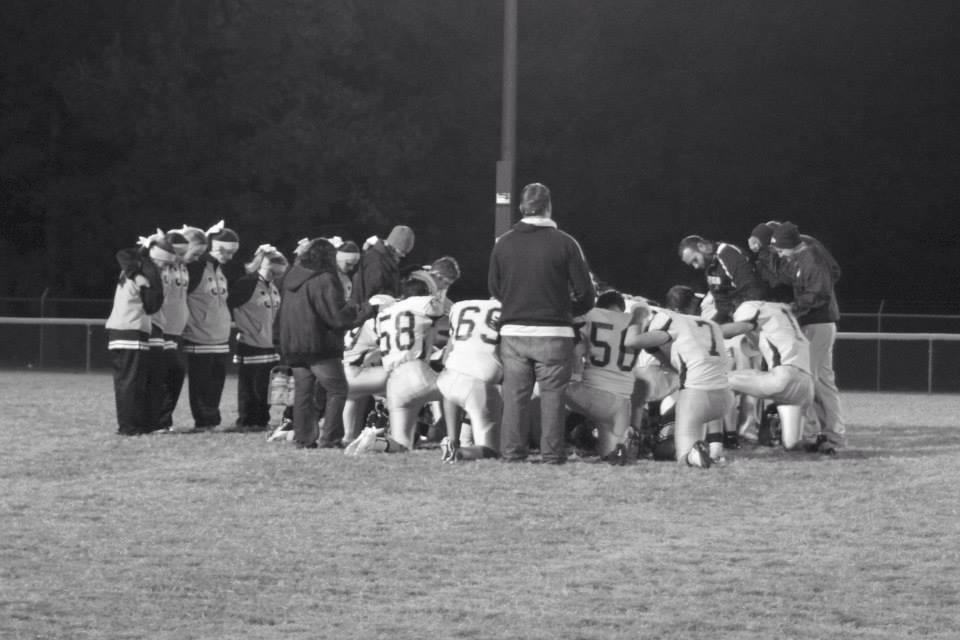
 married to the coach